
 Bonjour! I am Mathieu Lefebvre, I am a French national taking medicine in the United States. I took a great interest in alternative medicine since they are very prevalent here in the United States than in my native country! Though they are not really taught in our school that extensively, I find myself learning about them for the sake of knowledge!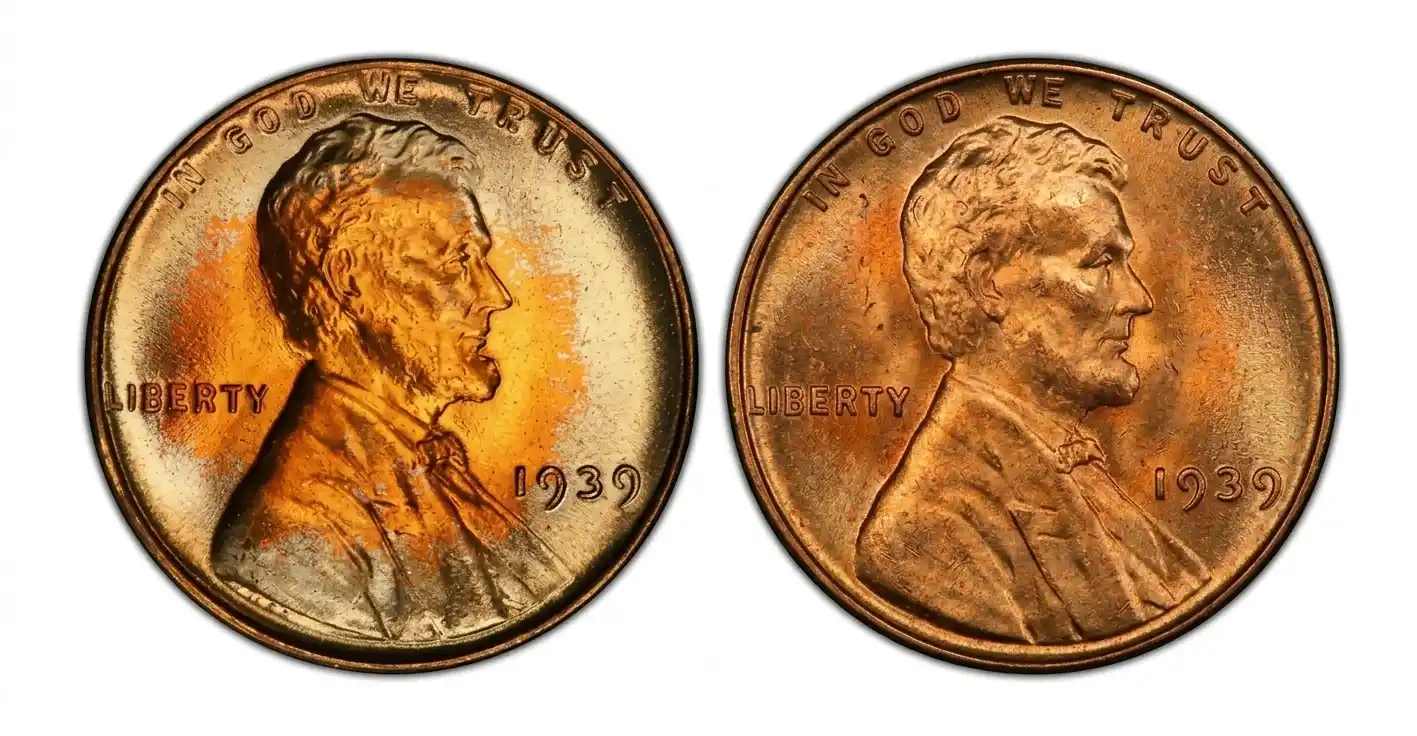
This coin reflects the final calm years before wartime changes reshaped American coin production.
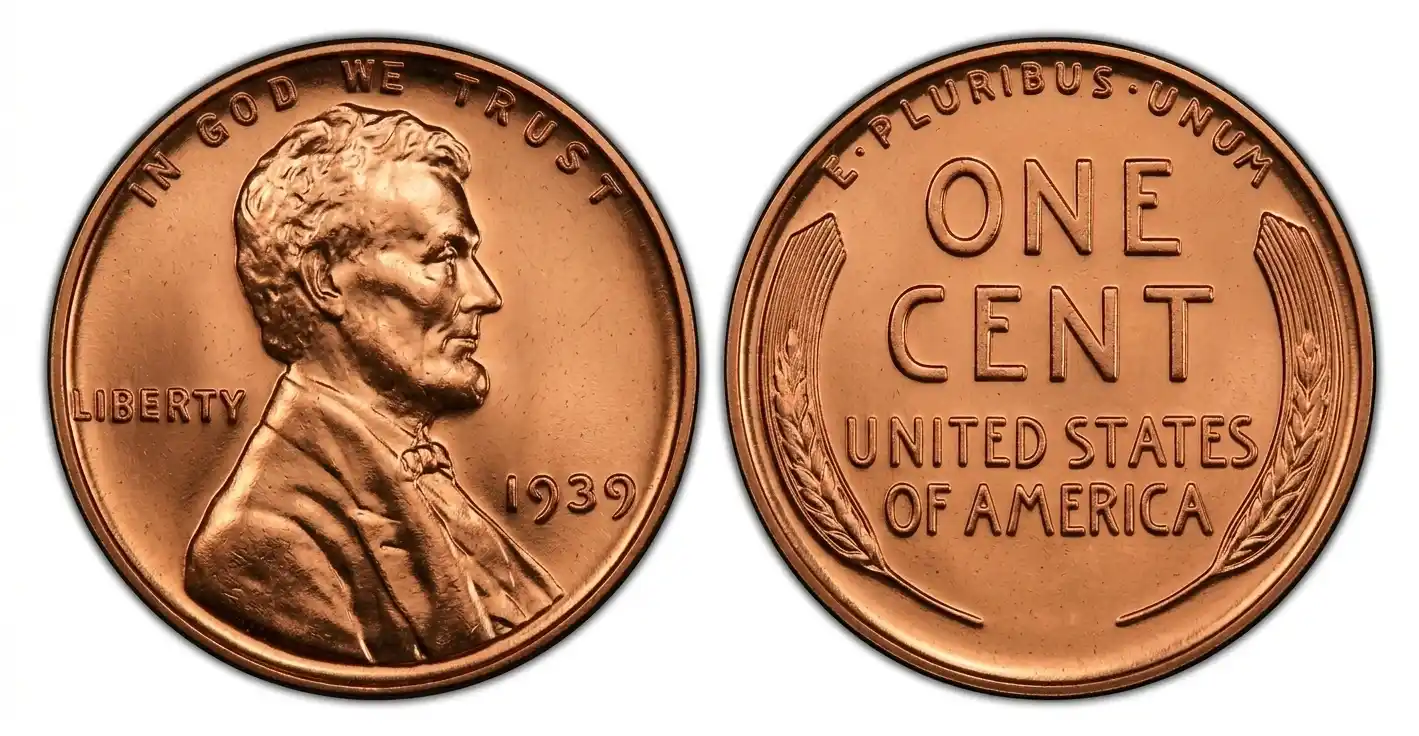
Standard manufacturing protocols defined the physical properties of all coinage produced in 1939.
Each individual 1939 penny follows strict weight and measurement guidelines established by the United States Mint.
Physical Metric | Exact Specification |
Item Mass | 3.11 grams |
Exterior Diameter | 19.05 millimeters |
Edge Thickness | 1.55 millimeters |
Copper Content | 95 percent |
Tin and Zinc Content | 5 percent |
Edge Type | Plain |
Production Statistics by Branch Location
Three separate facilities handled the striking of these bronze units throughout the calendar period.
Overall production volume increased significantly compared to the middle years of the decade.
Philadelphia Mint → 316,466,000 units
Denver Mint → 15,160,000 units
San Francisco Mint → 52,190,000 units
Special Proof Strike → 13,520 units
Total annual mintage reached 383,831,520 pieces.
Philadelphia Branch: Characteristics of No Mint Mark Issues
The main facility in Philadelphia supplied the largest portion of the circulating currency.
Coins originating from this location lack a letter designation beneath the date.
Surviving specimens often exhibit high durability due to the quality of the steel dies used during that era.
Circulated examples found in common jars maintain a market price near their face value.
High grade specimens representing the peak of production quality command significant financial premiums.
Value trends for 1939 Lincoln Cent MS67 Red:
2024 price: $180 per unit.
2025 price: $205 per unit.
2026 price: $235 per unit.
Annual growth rates for this specific grade average approximately 14 percent.
Record auction prices involve units reaching the MS68 Red classification.
Heritage Auctions handled a sale for a top tier specimen totaling $5,875.
Grading professionals determine final worth based on the presence of original copper luster.
Red RD
Red Brown RB
Brown BN
Denver Branch: Analysis of the 1939-D Release
Units bearing the D mark exist in much lower quantities than the Philadelphia issues.
Lower mintage figures directly correlate to higher market value for Denver strikes.
Many pieces show sharp details on the wheat stalks located on the reverse side.
Current market worth for 1939-D based on preservation levels:
Grade Level | Surface Condition | 2026 Value |
MS64 | Choice Uncirculated | $28 |
MS65 | Gem Uncirculated | $55 |
MS66 | Premium Quality | $110 |
MS67 | Superb Gem | $480 |
Consistent price appreciation remains steady at 8 percent per year.
The record price for a 1939-D in MS68 Red condition reached $6,900.
San Francisco Branch: Specifics of 1939-S Inventory
The western facility produced a moderate quantity of coinage compared to other branches.
The S mark appears clearly centered under the 1939 date.
Issues from this mint frequently display signs of die fatigue or worn striking surfaces.
Common samples found in circulation offer negligible added value over copper melt prices.
Value trends for 1939-S MS67 Red:
2024 price: $290 per unit.
2025 price: $330 per unit.
2026 price: $385 per unit.
Market data indicates a 16 percent increase in yearly valuation for elite specimens.
Maximum public auction prices for the 1939-S reached $9,200.
This result involved a rare MS68 specimen exhibiting perfect surface preservation.
Manufacturing Errors and Production Anomalies
Numismatic value increases drastically when a coin displays a verified factory error.
Professional certification through companies like Coin Appraisal App confirms the authenticity of these mechanical mistakes.
Double Die Obverse
This error occurs when the hub strikes the working die twice.
Inspectors look for thickening of the date digits and the letters in the word LIBERTY.
A specimen in MS65 condition maintains a value of $150.
Double Die Reverse
Reverse doubling happens less frequently than obverse variations.
Doubling appears most visible on the tips of the wheat ears.
A verified example in high grade carries a price of $200.
Re-punched Mint Mark
Engravers manually punched mint marks into the dies during this period.
A misaligned second punch creates a visible outline behind the primary D or S letter.
Collectors pay an additional $40 for this specific variety.
Off-Center Strike
Mechanical failures in the feeding system cause the planchet to sit improperly.
Part of the design disappears while the remaining image shifts toward the edge.
10 percent shift → $15 value
50 percent shift → $115 value
Clipped Planchet
Cutting machines occasionally overlap previous holes in the metal strip.
The resulting coin features a curved or straight missing section.
Current prices for verified clips range from $25 to $75.
Industrial Procedures and Technological Factors
The minting facilities utilized updated machinery to handle increasing economic demands.
Stamping presses operated at high speeds to process thousands of planchets per hour.
Raw metal strips underwent an annealing process to soften the molecular structure.
Softened metal allowed for deeper relief when the die impacted the surface.
Laboratories monitored the chemical purity of the copper batches.
Variations exceeding 0.13 grams resulted in the immediate melting of the entire batch.
Logistics teams distributed the final product through the Federal Reserve system.
Value Variations Linked to Color Classification
Copper coinage undergoes oxidation affecting the visual appearance of the surface.
This factor determines the final selling price in professional environments.
Red RD → maintaining 95 percent of original luster
Red Brown RB → showing 5 to 95 percent luster
Brown BN → possessing less than 5 percent luster
Price gaps between RD and BN categories often exceed 300 percent in identical grades.
Data shows a 3 percent annual decline in market demand for BN specimens.
Investors focus on RD units because the available supply continues to shrink.
Professional Grading and Market Certification
Third party services provide an objective assessment of coin quality.
The evaluation process utilizes a 70 point scale to define surface preservation.
Sonic sealed plastic holders prevent further oxidation of the copper surfaces.
Population data for 1939 units within the free coin app registry:
Grade MS66 → 4,500 units
Grade MS67 → 1,200 units
Grade MS68 → 12 units
The extreme rarity of the highest grades ensures high liquidity during sales.
Large auction houses handle the majority of transactions for MS68 inventory.
Historical Context Influencing Survival Rates
The start of global conflict in Europe influenced American financial behavior.
Citizens began hoarding physical currency as a response to economic uncertainty.
Increased circulation velocity caused rapid wear on the 1939 strikes.
Finding a specimen without surface friction becomes harder with every passing decade.
The majority of circulating coins fall into grades below XF40.
Low grade coins maintain a worth of approximately $0.15.
Comparative Analysis Within the Wheat Cent Series
The 1939 issue occupies a middle ground within the overall collection.
These coins cost less than the rare dates from the early 1930s.
They command higher prices than the massive mintages seen during the mid 1940s.
The balance of supply and survival makes 1939 an ideal entry point for new participants.
Building a set often begins with this specific year due to accessibility.
Current market supply successfully meets the existing demand from local buyers.
Market Position and Long-Term Stability
The 1939 penny functions as a stable asset within the numismatic market.
Lack of extreme price volatility makes it a predictable choice for portfolio building.
Growth potential remains concentrated in the segment of perfectly preserved strikes.
Monitoring the registry sets provides insight into the total number of surviving gems.
New additions to the MS68 population level could dilute individual unit worth.
Recent trends show large investment funds acquiring high grade copper material.
Mechanical Die Preparation Processes
Engravers prepared the working dies using a master hub system.
The process required multiple strikes to transfer the full detail of the Lincoln portrait.
Heat treating the steel ensured the dies could withstand hundreds of thousands of impacts.
Minor differences in die preparation led to the distinct varieties found today.
Polished dies intended for proof sets received special handling by mint staff.
These proof strikes display mirrored surfaces and frosted design elements.